
In today’s fast-paced business world, understanding your financial outcomes is critical. Whether you are a student learning accounting, a business owner tracking profits, a trader calculating gains, or an e-commerce seller evaluating sales, knowing how to calculate profit, loss, and profit percentage is essential. While manual calculations are prone to errors and time-consuming, a free profit and loss calculator can simplify this process and deliver instant results with precision.
Our tool, the Free Profit & Loss Calculator, allows users to instantly calculate profit, loss, and percentage without complicated formulas. In this blog, we’ll explore the concept of profit and loss, how to use the calculator effectively, examples for students and business professionals, and answer common questions to maximize your understanding.
What is Profit and Loss?
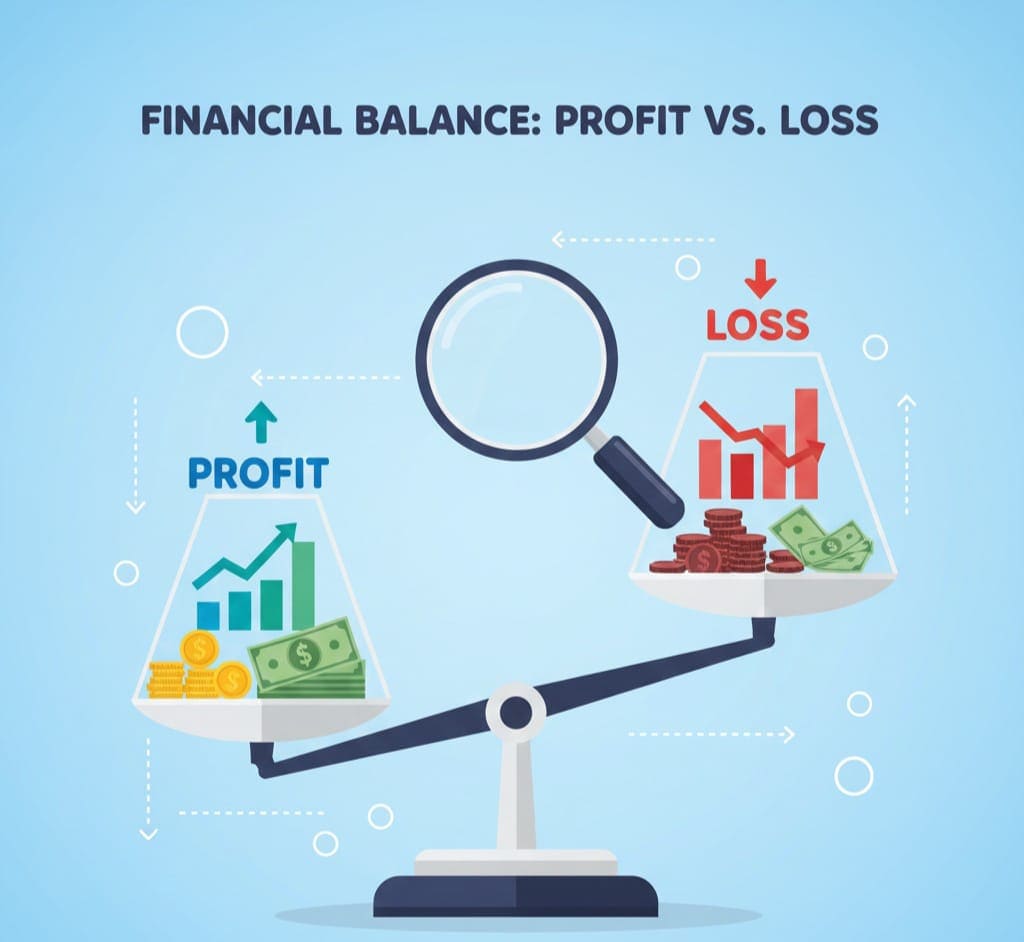
Profit and loss are fundamental concepts in finance and accounting.
-
Profit occurs when the selling price of an item or service exceeds its cost price.
-
Loss happens when the selling price is less than the cost price.
Formula for profit and loss:
-
Profit = Selling Price (SP) − Cost Price (CP)
-
Loss = Cost Price (CP) − Selling Price (SP)
-
Profit Percentage = (Profit ÷ Cost Price) × 100
-
Loss Percentage = (Loss ÷ Cost Price) × 100
These calculations are the backbone of financial decision-making. Accurately determining profit or loss ensures informed business strategies, pricing models, and investment decisions.
Why Use a Profit and Loss Calculator?
Manual calculation of profit and loss, especially for multiple items or varying quantities, can be tedious and error-prone. Here’s why using a profit and loss calculator is advantageous:
-
Instant results: Get profit or loss and percentage instantly.
-
Error-free calculations: No more mistakes due to manual math.
-
Multiple use cases: Works for students, business owners, traders, and e-commerce sellers.
-
Saves time: Perform calculations quickly for multiple items or bulk data.
-
User-friendly interface: No accounting knowledge required to use the calculator.
With the Free Profit & Loss Calculator, users can input cost price, selling price, quantity, and discounts or taxes, and receive accurate calculations instantly.
How to Calculate Profit, Loss & Percentage – Step by Step
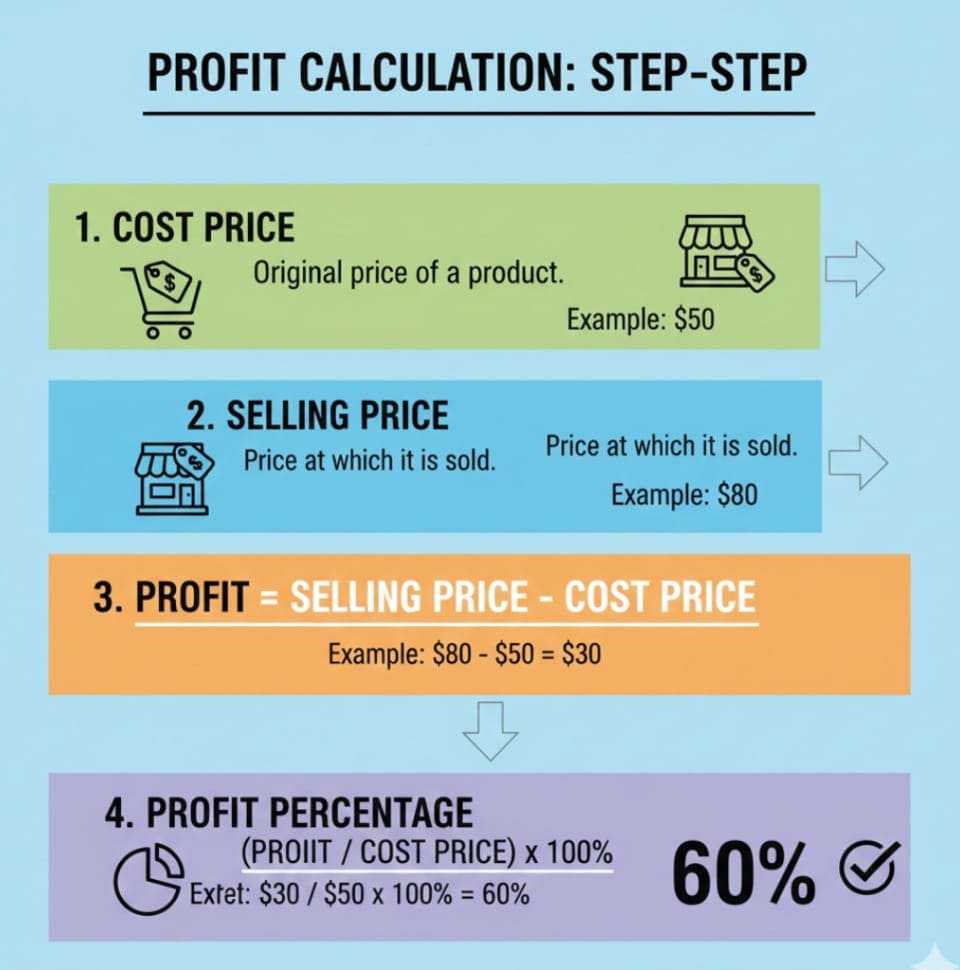
Step 1: Determine Cost Price and Selling Price
The cost price (CP) is the amount spent to acquire or produce an item, while the selling price (SP) is the amount the item is sold for.
Example:
-
CP = $500
-
SP = $650
Step 2: Calculate Profit or Loss
Use the formula:
-
If SP > CP → Profit = SP − CP
-
If SP < CP → Loss = CP − SP
Example:
-
Profit = 650 − 500 = $150
Step 3: Calculate Profit or Loss Percentage
-
Profit Percentage = (Profit ÷ CP) × 100
-
Loss Percentage = (Loss ÷ CP) × 100
Example:
-
Profit Percentage = (150 ÷ 500) × 100 = 30%
Step 4: Use the Online Calculator for Instant Results
Instead of manual calculations, you can input CP, SP, quantity, and additional charges into the Free Profit & Loss Calculator and get results instantly. The tool also handles multiple items and gives step-by-step solutions.
Features of the Free Profit & Loss Calculator
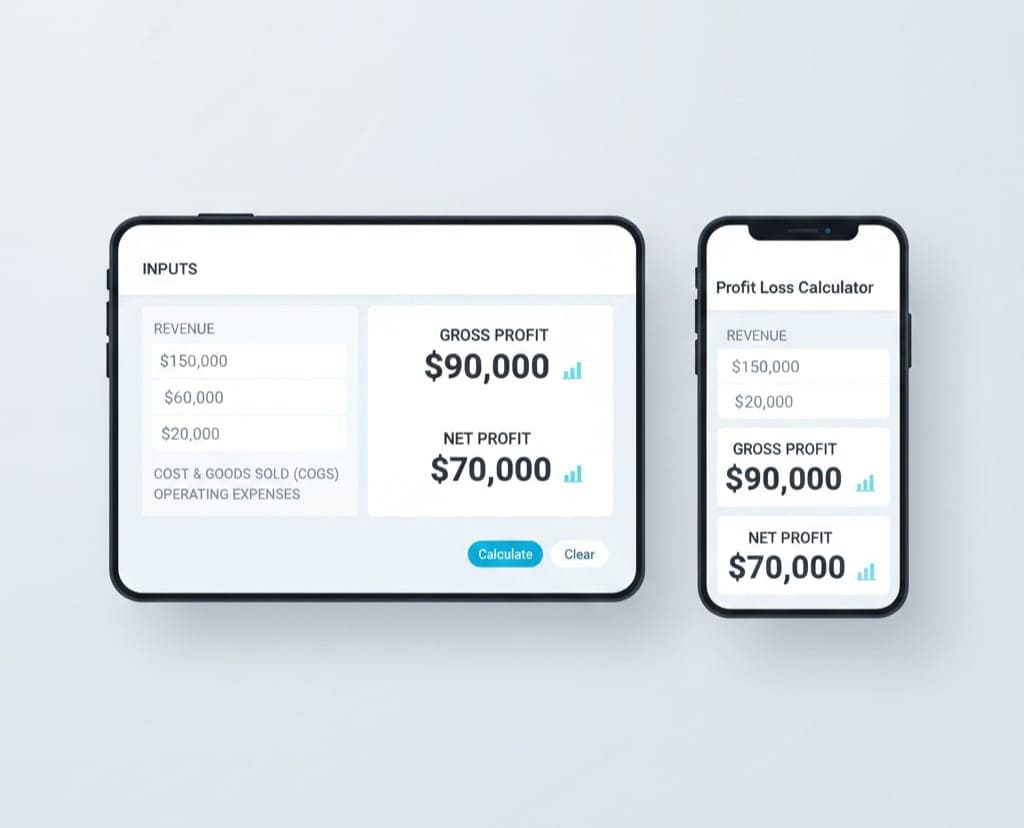
The tool is designed for accuracy, speed, and convenience. Some key features include:
-
Instant calculation of profit, loss, and percentage
-
Works for single or multiple items
-
Includes fields for discounts and taxes
-
Supports bulk calculations for business or trading purposes
-
Mobile responsive and easy to use
-
Step-by-step breakdown with formulas for educational purposes
-
Shows clear results for profit margin and ROI
This makes the calculator ideal for students preparing for exams, business owners managing inventory, and traders evaluating stock or commodities trades.
Examples of Profit & Loss Calculations
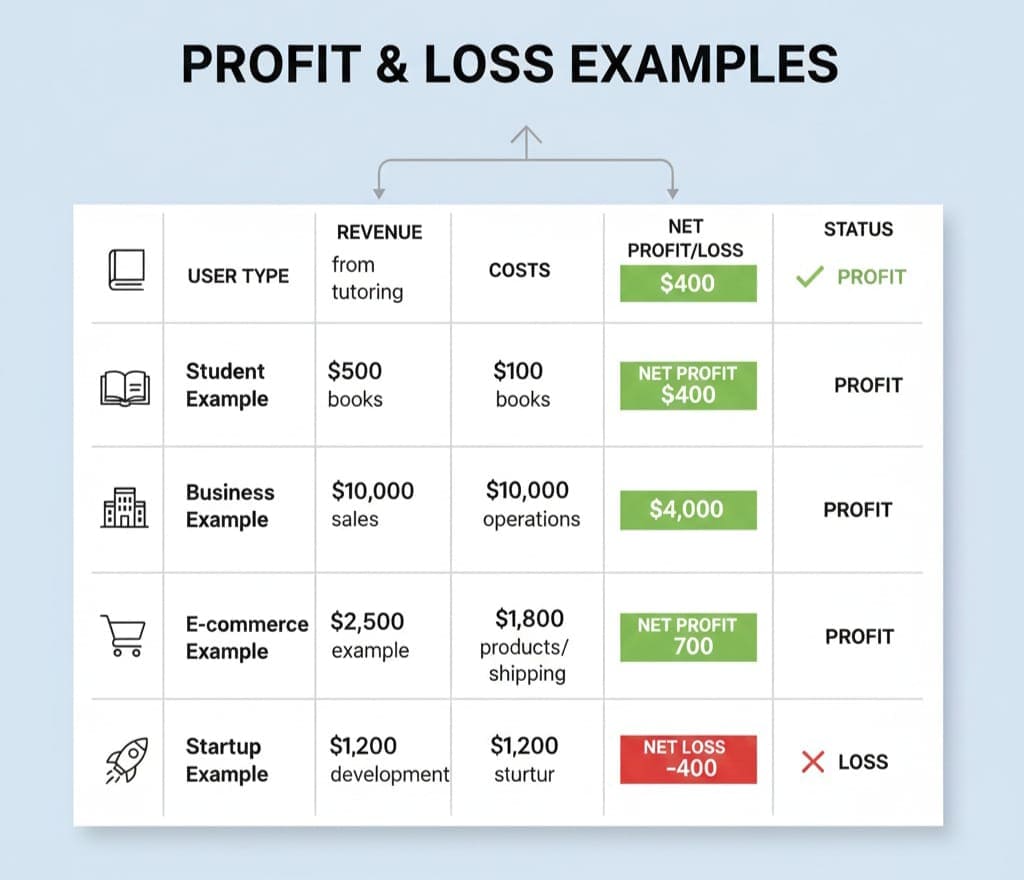
Example 1: Student Scenario
-
CP = $200
-
SP = $250
-
Profit = 250 − 200 = $50
-
Profit Percentage = (50 ÷ 200) × 100 = 25%
This example demonstrates how students can learn profit calculation without confusion using the online calculator.
Example 2: Business Owner Scenario
-
CP of 100 units = $5000
-
SP of 100 units = $6000
-
Profit = 6000 − 5000 = $1000
-
Profit Percentage = (1000 ÷ 5000) × 100 = 20%
The calculator allows quick calculation for bulk inventory, saving business owners significant time.
Example 3: E-commerce Scenario
-
CP = $50 per item
-
SP = $70 per item
-
Quantity sold = 30
-
Total CP = 50 × 30 = $1500
-
Total SP = 70 × 30 = $2100
-
Profit = 2100 − 1500 = $600
-
Profit Percentage = (600 ÷ 1500) × 100 = 40%
The tool calculates all totals automatically, which is crucial for online sellers managing multiple SKUs.
Technical Terms Related to Profit & Loss
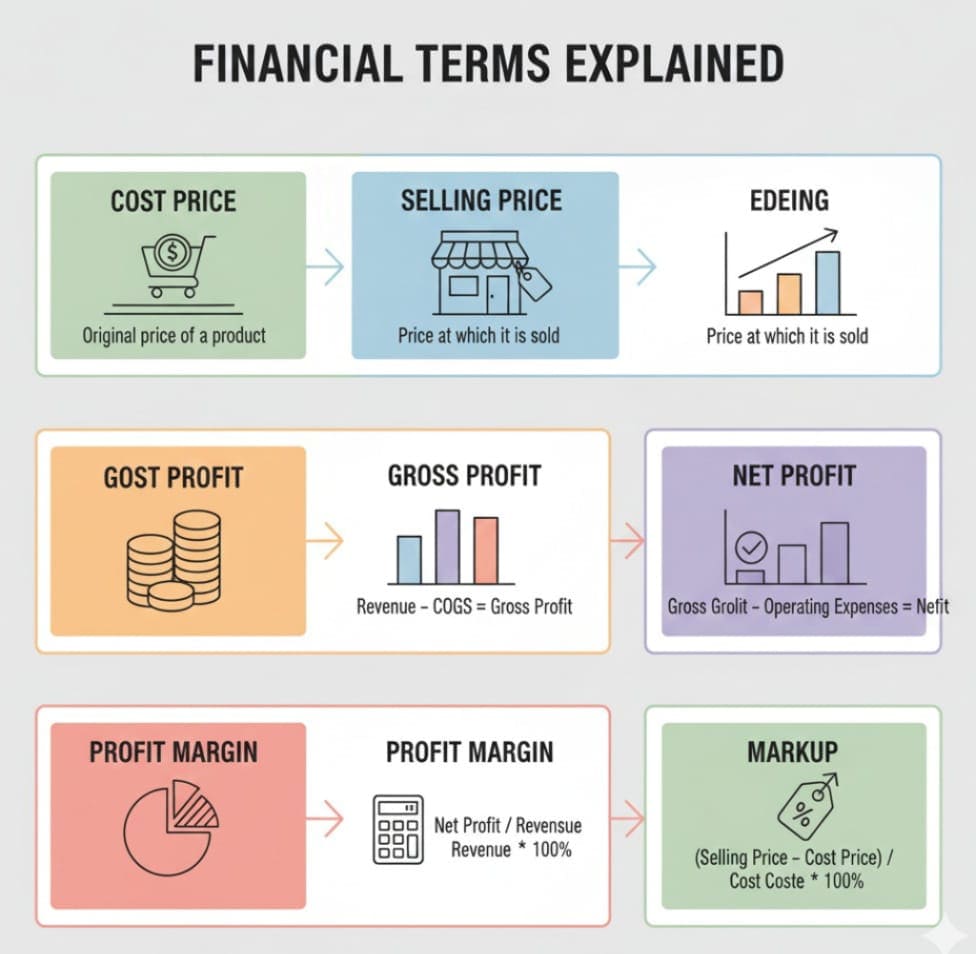
Understanding some technical terms improves clarity:
-
CP (Cost Price): Original price of an item
-
SP (Selling Price): Price at which item is sold
-
Profit Margin: Percentage of profit over cost
-
Markup: Difference between cost price and selling price expressed as a percentage
-
Gross Profit: Total profit before expenses
-
Net Profit: Profit after deducting expenses, taxes, and other costs
The Free Profit & Loss Calculator incorporates all these calculations to simplify financial management.
Audience-Specific Benefits

Students
-
Learn and understand profit/loss formulas
-
Prepare for accounting and mathematics exams
-
Check results instantly without manual errors
Business Owners
-
Track profit/loss for products in inventory
-
Evaluate pricing strategies
-
Handle bulk calculations for multiple SKUs
Traders
-
Calculate profit/loss for stock or commodity trades
-
Adjust for trading fees, taxes, or discounts
-
Make quick decisions on buy/sell strategy
E-commerce Sellers
-
Determine profitability per product
-
Factor in shipping, tax, and discounts
-
Optimize pricing for maximum profit
Step-By-Step Use of the Free Profit & Loss Calculator
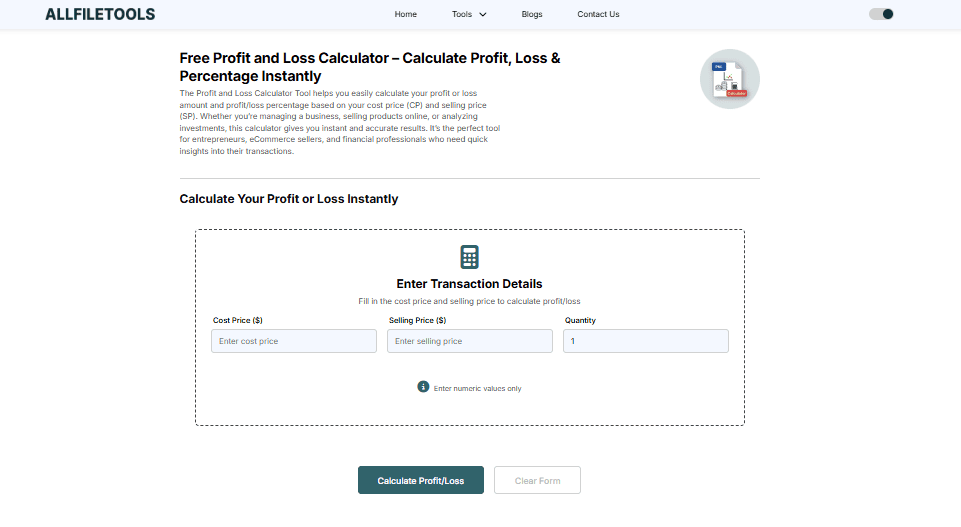
-
Open the calculator link
-
Enter cost price (CP) and selling price (SP)
-
Input quantity if multiple items are sold
-
Add tax or discount if applicable
-
Click Calculate
-
View instant results including profit, loss, and percentage
-
Review step-by-step breakdown for learning or auditing
This tool ensures accuracy, speed, and efficiency for any user, from student to professional.
Conclusion

Understanding profit and loss is essential for financial literacy, whether for students, business owners, traders, or e-commerce professionals. Manual calculations can be tedious, time-consuming, and error-prone. The Free Profit & Loss Calculator solves this problem by providing instant, accurate results, handling multiple items, and offering a step-by-step explanation of formulas.
By using this tool, users can make informed business decisions, learn accounting concepts efficiently, and save significant time, ensuring a smoother workflow and better financial management.
Frequently Asked Questions
1. What is a profit and loss calculator?
A profit and loss calculator is an online tool that instantly computes profit, loss, and percentages based on cost price, selling price, and quantity.
2. How do I calculate profit percentage?
Profit percentage = (Profit ÷ Cost Price) × 100. Using our calculator, this is done automatically.
3. Can I calculate profit for multiple items?
Yes, the tool supports multiple items, adding quantities to calculate total profit/loss and percentages.
4. Is this calculator free to use?
Absolutely. The Free Profit & Loss Calculator is 100% free with no hidden charges.
5. Can I include tax or discounts in the calculation?
Yes, you can enter tax or discount values, and the calculator will adjust results accordingly.
6. Who can use this calculator?
Students, business owners, traders, e-commerce sellers, accountants, and general users can all benefit.
7. Why is using an online calculator better than manual calculation?
It is faster, more accurate, reduces errors, handles multiple items, and saves time compared to manual calculation.
Leave a Comment
No comments yet. Be the first to comment!