
In the world of search engine optimization (SEO), every small signal matters — and one of the most important, yet often overlooked, signals is heading tags: H1, H2, H3, and beyond. Headings do more than just break content into readable chunks; they help search engines understand your page’s hierarchy, your primary topic, and how secondary ideas relate to each other. But how do you analyze whether your headings are structured correctly? How do you quickly extract them from a live site? That’s where a Headings Extractor tool becomes not just useful but essential.
Whether you are a SEO professional auditing a client site, a blogger wanting to optimize your article structure, a developer ensuring semantic HTML, or a content writer needing to organize your thoughts logically, understanding and optimizing heading tags can significantly impact your on‑page SEO and user experience.
In this blog post, we will walk you through everything you need to know about headings — from why they matter in SEO to how to use a free online Headings Extractor to audit and optimize heading usage for better ranking success. We will also cover real examples, best practices, and actionable tips to elevate your content structure.
What Are HTML Heading Tags and Why They Matter for SEO
HTML heading tags (<h1>, <h2>, <h3>, etc.) define the structure of your content. They act as signposts for both search engines and human readers.
What Each Heading Tag Means
-
H1 Tag
This represents the main topic of the page — it should only appear once and clearly summarize what the page is about. -
H2 Tags
These denote major sections or subtopics under the main topic — think of them as chapter titles. -
H3 Tags
These are subsections within each H2 — supporting deeper content under a major section. -
H4–H6 Tags
Used for further nested content, though less common in typical web content.
Search engines like Google look at the heading structure to understand how content is organized. A logical hierarchy (H1 → H2 → H3…) helps them parse your content’s main points and subpoints, which in turn supports better indexing and relevance signals. Grigora+1
The SEO Value of Heading Tags
1. Helps Search Engines Understand Context
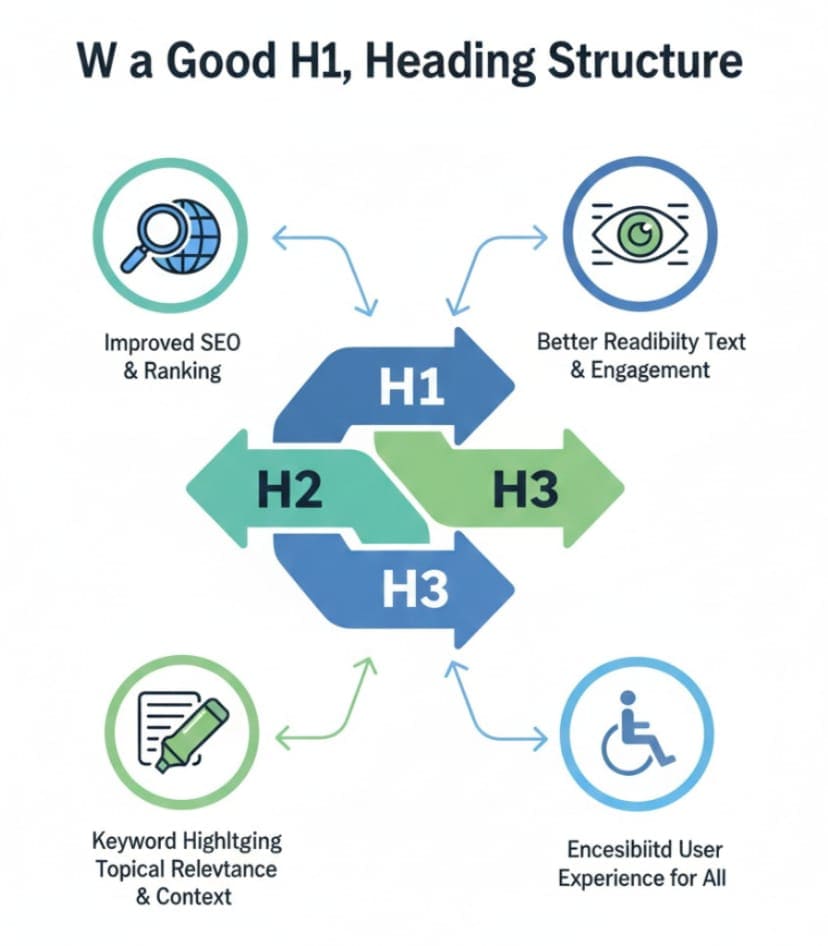
Search engine crawlers use headings as cues to understand the structure of content. A clear hierarchy defines where major topics begin and how subtopics relate to each other — essentially building a content map.
2. Improves User Experience
Headings break content into digestible sections. Users can scan quickly, find the information they need, and stay on the page longer — reducing bounce rates and improving engagement.
3. Keyword Relevance and Placement
Incorporating target keywords naturally into headings (especially H1 and H2) tells search engines exactly what your content is about without keyword stuffing. If done well, this can support visibility for related search queries. allfiletools.com
4. Accessibility Benefits
Assistive technologies such as screen readers rely on heading structures to help users with disabilities navigate content effectively. A logical heading flow increases accessibility compliance.
What Is a Headings Extractor Tool?
A Headings Extractor is an SEO utility that:
-
Extracts all heading tags (
H1–H6) from any webpage -
Displays them in a clear, readable list
-
Helps you review whether your headings are missing, duplicated, or out of order
-
Shows hierarchy, so you can fix structural issues
You can instantly check the heading structure of any URL with tools like Headings Extractor – Free Online H1, H2, H3 Tag Analyzer for SEO at https://www.allfiletools.com/headings-extractor/. allfiletools.com
This is extremely helpful when auditing SEO performance or planning content updates — it eliminates guesswork.
How a Headings Extractor Works (Step‑by‑Step)
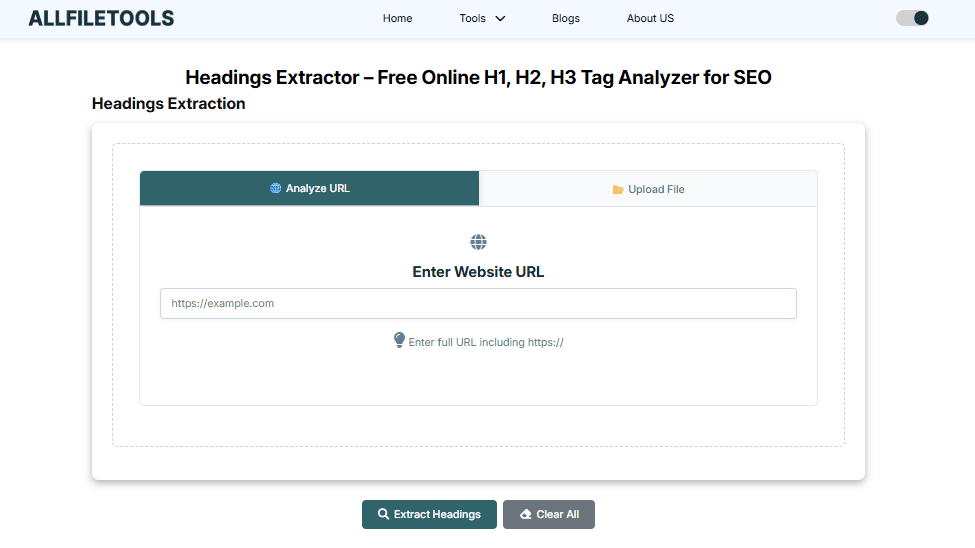
Here’s a simple way to use an online headings extractor tool:
Step 1: Open the Tool
Visit the online Headings Extractor tool — for example, https://www.allfiletools.com/headings-extractor/.
Step 2: Enter a URL
Paste the web page URL you want to analyze into the input.
Step 3: Extract Headings
Click the “Extract” button to see all heading tags listed in order.
Step 4: Review the Results
You’ll see a list of all headings from H1 through H6, showing where each appears and how they are structured.
This simple process gives you the skeleton of the content — so you can spot issues like:
-
Multiple H1 tags
-
Missing H2 or H3 tags
-
Skipped hierarchies (e.g., jumping from H1 to H4)
-
Headings that lack keyword relevance
Common Heading Structure Issues and How to Fix Them

1. More Than One H1 Tag
🔹 Problem: Multiple H1 tags dilute the primary topic and confuse search engines.
✔️ Fix: Keep only one H1 that precisely states the page’s main subject.
2. Skipped Heading Levels
🔹 Problem: Jumping from H2 to H4 without an H3 can break logical content flow.
✔️ Fix: Maintain a natural hierarchy (H1 → H2 → H3).
3. Generic or Non‑Descriptive Headings
🔹 Problem: Headings like “Introduction” or “Details” are vague and don’t communicate value.
✔️ Fix: Use descriptive headings that accurately reflect the section content and include relevant keywords.
4. Headings Used for Styling Only
🔹 Problem: Using heading tags merely to make text bigger (instead of CSS) can mislead search engines.
✔️ Fix: Reserve headings for structural and semantic purposes only.
Fixing these issues makes content more accessible, logical, and SEO‑friendly — and should be part of your regular content optimization workflow. seoaegis.com
Headings and Keyword Strategy
Here’s how to improve your keyword placement via headings:
H1 Tag
Include your primary target keyword in the H1, ideally near the beginning.
H2 Tags
Use secondary and long‑tail keywords in H2 tags — these often address subtopics that searchers care about.
H3 Tags
Use synonyms, semantic variations, and supporting keywords here — they help reinforce context for search engines. For example:
-
If your primary keyword is headings extractor tool, H2s might include how to extract headings online, headings hierarchy SEO best practices, and analyzing competitor headings.
By distributing keywords naturally throughout headings, your content signals relevance without sounding repetitive or forced.
Examples: Good vs. Bad Heading Usage

Bad Structure
<h1>Page Title</h1> <h3>Subheading Without H2</h3> <h5>Another Section</h5>
Why it’s bad: Skips levels, confuses hierarchy, and doesn’t use headings for content structure.
Good Structure
<h1>Headings Extractor – Find & Optimize H1, H2, H3 Tags for SEO Success</h1> <h2>Why Heading Tags Matter for SEO</h2> <h3>Search Engine Understanding</h3> <h3>User Experience and Accessibility</h3> <h2>How to Use a Headings Extractor Tool</h2> <h3>Step‑by‑Step Guide</h3>
Why it’s good: Logical order, clear topics in H2s, and relevant subtopics in H3s.
Tools You Can Use to Extract Headings
Several free tools provide heading extraction functionality:
-
Headings Extractor – Free Online H1, H2, H3 Tag Analyzer at https://www.allfiletools.com/headings-extractor/ (an intuitive SEO tool that pulls all headings instantly) allfiletools.com
-
H1, H2, H3 Extractor via SeoRankify — simple and effective for quick audits seorankify.com
-
Bulk H1 & Heading Checker via SEOAegis — useful when checking multiple URLs at once seoaegis.com
-
Heading Structure Extractor for visual hierarchy views Grigora
-
Tools like FreshJuice heading extractor to preserve heading order while extracting FreshJuice
Each has its own strengths — some offer bulk extraction, others show full HTML context, while the AllFileTools version focuses on simplicity and immediate insights.
Best Practices for Heading Optimization
Here are strategies you can implement after extracting headings:
Use Headings to Answer Search Intent
Understand what searchers are looking for — often headings mirror common questions or subtopics in search results.
Match Heading Language With Search Queries
If your audience searches for terms like how to optimize H1 tags, include those keywords in an H2 or H3.
Balance SEO With Readability
Never sacrifice readability just to include a keyword — headings must be user‑friendly first.
Audit Regularly
Headings aren’t set‑and‑forget. When you update content or add new sections, re‑extract and evaluate headings.
Align With Content Goals
Each heading should promise a benefit. If a user scans your H2 list and understands what they’ll learn, you’re on the right path.
Common Mistakes to Avoid With Headings
Despite their importance, many websites make the same mistakes:
-
Using headings purely for styling instead of semantic structure
-
Trying to include too many keywords in a single heading
-
Neglecting to use H3 subheadings under H2s when needed
-
Duplicating the same H1 across multiple pages
Avoiding these mistakes helps keep both search engines and humans happy.
Real‑World Headings Extractor Use Cases

SEO Technical Audit
When auditing a site, a headings extractor tool helps you spot structural issues immediately — especially missing H1s or H2s.
Competitor Analysis
Extracting headings from competitor pages shows how they structure content and what keywords they prioritize — influencing your own strategy.
Pre‑Publishing Review
Before publishing new content, run a quick heading extraction to ensure consistency and keyword alignment.
Editorial Planning
Use extracted headings to inform your content outline — ensure all major subtopics are covered logically.
Conclusion
Mastering headings is a fundamental part of content and SEO strategy. A structured heading hierarchy not only helps search engines understand content better but also makes your pages more readable, accessible, and engaging for users. Tools like Headings Extractor – Free Online H1, H2, H3 Tag Analyzer for SEO at https://www.allfiletools.com/headings-extractor/ give you immediate insights into your page’s heading structure — enabling quick audits, fixes, and optimization opportunities.
By regularly extracting and optimizing headings, you’ll build content that ranks better, satisfies user intent, and delivers real value to your readers. Whether you are a seasoned SEO expert or a beginner just starting out, heading optimization should be a core part of your on‑page SEO toolkit.
Frequently Asked Questions (FAQs)
1. What is a Headings Extractor tool and how does it help SEO?
A Headings Extractor tool analyzes a webpage’s heading tags (H1–H6), showing their order and hierarchy. It helps ensure semantic structure, keyword relevance, and SEO‑friendly content organization — supporting better search engine understanding. allfiletools.com
2. Why are H1, H2, and H3 tags important for on-page SEO?
These heading tags define your page’s structure and topics. H1 tells search engines the main theme, while H2 and H3 break content into logical sections that match user queries and search intent. Grigora
3. How many H1 tags should a page have?
Best practice is to have exactly one H1 tag per page. Multiple H1s can confuse search engines about your primary topic. seoaegis.com
4. Can headings influence search engine rankings?
While headings themselves aren’t a direct ranking factor, they help search engines interpret content structure and context — which indirectly supports better relevance signals and indexing. Thruuu
5. Are H4, H5, and H6 tags necessary for SEO?
These deeper heading levels are useful for large, complex pages but not mandatory. Focus first on H1–H3 for most SEO content. Grigora
6. How often should I audit heading structure?
Audit headings whenever you publish new content, update existing articles, or notice SEO performance changes. Regular checks help maintain clarity and relevance.
7. Can I use headings extractor tools for competitor analysis?
Yes! Extracting headings from competitor pages reveals their content focus, keyword strategy, and how they structure subtopics — valuable for shaping your own content.
Leave a Comment
No comments yet. Be the first to comment!