Introduction
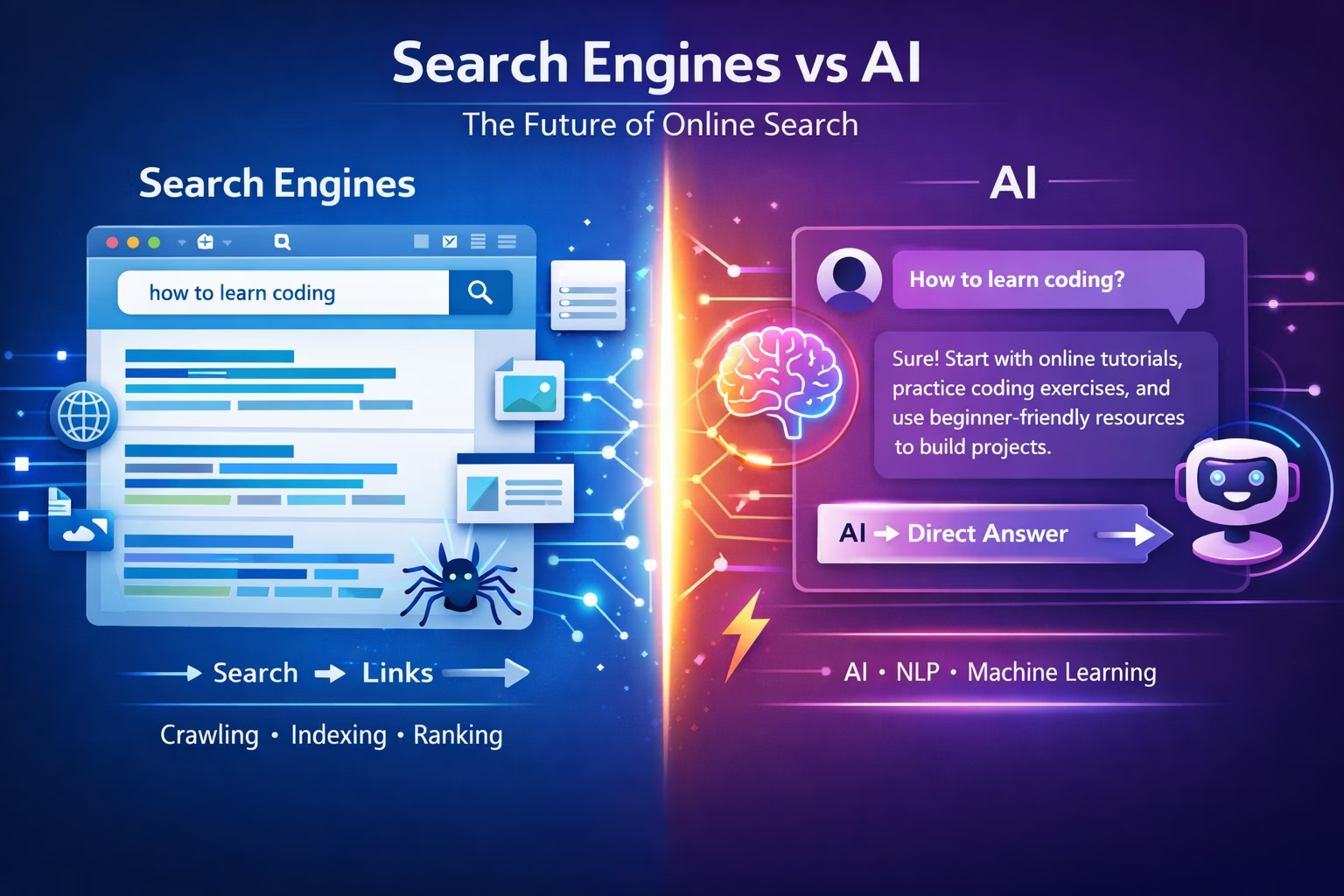
For decades, search engines have been the primary way people find information online. Whether users want to read a tutorial, research a topic, or find a product, they usually start by typing a query into a search engine such as Google or Bing.
However, the way people search for information is rapidly evolving. Artificial intelligence tools like ChatGPT, Google Gemini, and Microsoft Copilot now allow users to ask questions and receive direct answers instead of browsing through multiple websites.
This shift is transforming the digital landscape. Businesses, bloggers, and developers need to understand both traditional search engines and AI-powered assistants.
In this guide, you will learn:
-
How search engines work
-
How AI tools generate answers
-
Key differences between search engines and AI
-
The future of search technology
What Is a Search Engine?
A search engine is an online system that helps users find information on the internet. It scans billions of web pages and displays the most relevant results based on a user's query.
Popular search engines include:
-
Google
-
Bing
-
Yahoo
When a user searches for something, the search engine analyzes its database of indexed web pages and presents relevant results on the search results page.
The main goal of search engines is to deliver accurate, helpful, and trustworthy information quickly.
How Search Engines Work
Search engines operate through three core processes:
-
Crawling
-
Indexing
-
Ranking
These steps allow search engines to discover, store, and organize information from across the internet.
1. Crawling: Discovering Web Pages
Crawling is the process of discovering new and updated web pages.
Search engines use automated bots called crawlers or spiders to scan websites across the internet. For example, Googlebot is the crawler used by Google.
These bots follow links from one page to another and collect information about each page they visit.
Crawlers look at elements such as:
-
Page content
-
Images
-
Links
-
Page structure
-
Metadata
Websites can also help search engines crawl their pages by providing a sitemap and properly structured internal links.
2. Indexing: Storing Information
Once a page is crawled, the search engine processes and stores it in a massive database known as the index.
During indexing, the search engine analyzes various elements of the page, including:
-
Keywords
-
Page content
-
Headings
-
Images
-
Structured data
-
Internal links
The goal of indexing is to understand what the page is about so it can be shown to users when relevant queries are searched.
Tools like Google Search Console help website owners check whether their pages are properly indexed.
3. Ranking: Delivering the Best Results
When a user enters a search query, the search engine scans its index and ranks pages based on relevance and quality.
This ranking process uses complex algorithms, including systems such as Google PageRank.
Ranking factors include:
-
Content quality
-
Keyword relevance
-
Backlinks
-
Website authority
-
Page speed
-
Mobile friendliness
-
User experience
The results are then displayed on the Search Engine Results Page (SERP).
What Is Artificial Intelligence in Search?
Artificial intelligence is changing how users access information online.
Instead of showing a list of links, AI tools generate direct answers to user questions.
Examples of AI assistants include:
-
ChatGPT
-
Google Gemini
-
Microsoft Copilot
These systems use advanced machine learning models trained on large datasets to understand language and produce human-like responses.
AI assistants are designed to provide explanations, summaries, and recommendations in a conversational format.
How AI Generates Answers
AI tools work differently from traditional search engines.
Instead of crawling and indexing web pages in real time, AI systems rely on large trained models built using technologies like:
-
Machine Learning
-
Natural Language Processing
These technologies allow AI to:
-
Understand user questions
-
Interpret context
-
Generate detailed responses
-
Summarize information
For example, when a user asks a question in ChatGPT, the AI analyzes the prompt and generates an answer based on patterns it learned during training.
AI vs Search Engines: Key Differences
Although both technologies help users find information, their approach is very different.
| Feature | Search Engines | AI Tools |
|---|---|---|
| Output | List of website links | Direct answers |
| Technology | Crawling, indexing, ranking | AI models |
| Interaction | Query-based search | Conversational |
| Examples | Google, Bing | ChatGPT, Google Gemini |
Search engines help users discover sources, while AI tools summarize information directly.
Advantages of Search Engines
Search engines still play a critical role in the internet ecosystem.
Key advantages include:
Access to Multiple Sources
Search engines provide links to many different websites, allowing users to compare information.
Real-Time Information
Search engines constantly crawl and update web pages to provide current information.
Source Transparency
Users can verify information by visiting the original website.
Advantages of AI Assistants
AI tools provide a different type of experience.
Instant Answers
Users can get a summarized response without visiting multiple websites.
Conversational Interaction
AI tools allow follow-up questions and interactive discussions.
Productivity Support
AI can help with writing, coding, learning, and research tasks.
Platforms like Microsoft Copilot integrate AI directly into productivity workflows.
Limitations of Search Engines and AI
Both technologies have limitations.
Search Engine Limitations
-
Users may need to open multiple pages
-
Some results may contain outdated or low-quality content
-
Ranking competition can affect visibility
AI Limitations
-
AI responses may occasionally contain errors
-
Some information may not be up to date
-
Lack of clear source attribution in some cases
Because of these limitations, users often benefit from combining both AI tools and search engines.
The Future of Search: AI + Search Engines
The future of search is not about replacing search engines but improving them with artificial intelligence.
Search companies are already integrating AI into their platforms.
For example, Google has introduced AI-powered search experiences, while Microsoft integrates AI through Microsoft Copilot.
These innovations aim to combine:
-
AI-generated answers
-
Traditional web results
-
Personalized recommendations
This hybrid approach may become the standard for how people find information online.
Which Is Better: AI or Search Engines?
The answer depends on the user's needs.
AI tools are ideal for:
-
Quick explanations
-
Summaries
-
Learning concepts
Search engines are better for:
-
Research
-
Finding reliable sources
-
Accessing up-to-date information
In many situations, users benefit from using both technologies together.
Conclusion
Search engines have powered the internet for decades by helping users discover websites and information across the web. Through crawling, indexing, and ranking, platforms like Google and Bing organize billions of web pages and deliver relevant search results.
At the same time, artificial intelligence tools such as ChatGPT, Google Gemini, and Microsoft Copilot are transforming how people interact with information by providing conversational answers and summaries.
Rather than replacing search engines, AI is likely to enhance them. The future of search will likely combine the strengths of both technologies, giving users faster answers while still connecting them to reliable sources.
Understanding how both systems work can help businesses, developers, and content creators adapt to the evolving digital landscape.



Leave a Comment
No comments yet. Be the first to comment!