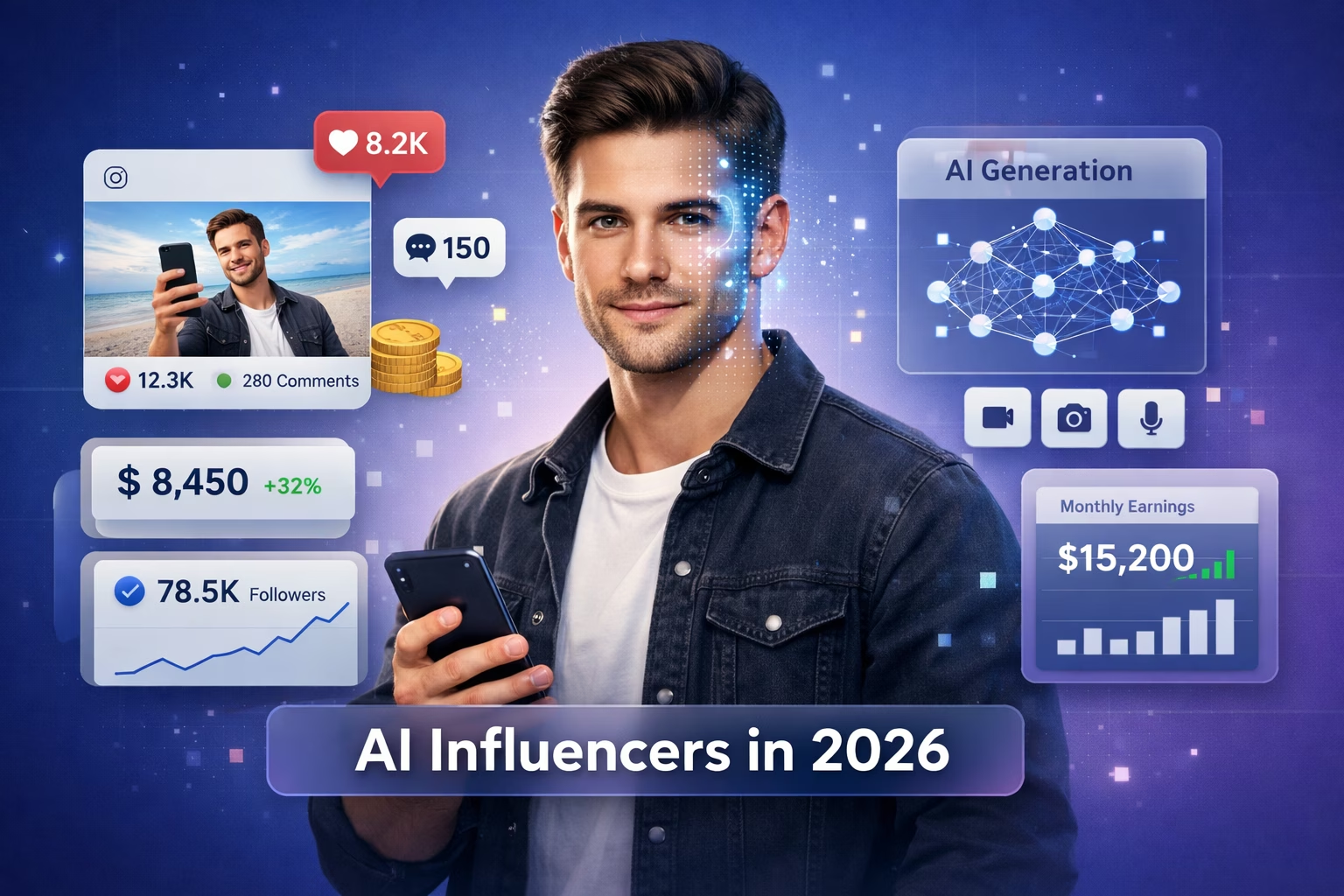
Introduction: The Creator Economy Just Got a New Player
Somewhere on Instagram right now, a fitness influencer is posting her third piece of content today. She is hitting the gym, traveling to new locations, signing brand deals, and responding to fan messages around the clock. She has over 380,000 followers. Brands like Razer pay to work with her.
She is not real.
Her name is Aitana Lopez, and she is one of the most successful AI influencers in the world — earning anywhere from $3,000 to $11,000 per month through brand collaborations alone. The person behind her is a small creative agency in Spain. There is no studio, no model, no flight bookings.
Welcome to 2026, where the virtual influencer is no longer a gimmick. It is a legitimate, scalable business model.
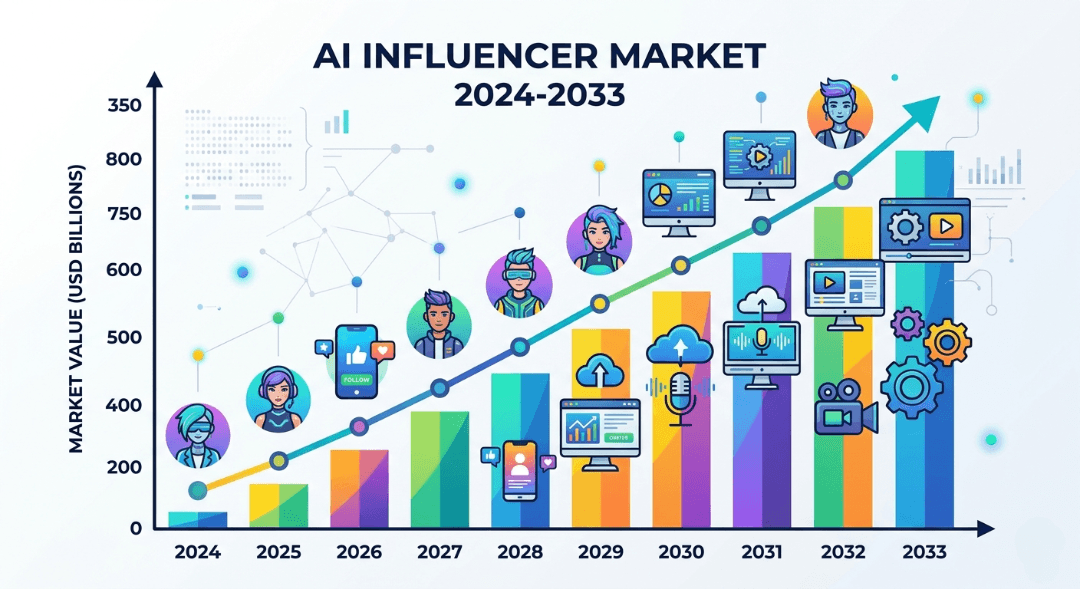
The global virtual influencer market was valued at $6.33 billion in 2024 and is projected to reach $111.78 billion by 2033. Brands are already allocating roughly 30% of their influencer marketing budgets to AI-generated personas this year. And the technology has finally caught up to the vision — photorealistic images, seamless video animation, multilingual voice synthesis, and identity-locking tools that maintain a consistent face across thousands of posts.
If you have ever wanted to build an online presence without stepping in front of a camera, or if you are a brand looking for a scalable content asset you fully control, this guide is for you. We will walk through everything — from defining your persona to growing your following, solving the toughest technical challenge (character consistency), monetizing your creation, and staying on the right side of the law.
Why 2026 Is the Best Time to Start an AI Influencer
Before we get into the how, it is worth understanding why this moment matters.
The market window is wide open. Of the estimated 15,000 to 20,000 active AI influencer accounts on TikTok alone, fewer than 150 exceed 100,000 followers. The space is not saturated. Creators who establish their persona now, while the tools are accessible but the competition is still thin, have a genuine early-mover advantage.
The tools have crossed a quality threshold. As recently as 2023, creating a realistic AI persona required a budget, a team, and significant technical skill. In 2026, you can generate a photorealistic, character-consistent AI influencer using a small monthly subscription and a few hours of setup. The gap between what is possible and what is accessible has essentially closed.
The earnings potential is proven. Lil Miquela, often called the original AI influencer, reportedly earns around $2 million per year. Brazil's Lu do Magalu has generated an estimated $2.5 million across sponsored Instagram posts in a single year. These are outliers, but they demonstrate that the model works. New creators in focused niches are realistically achieving $5,000 to $30,000 per month once their audience reaches consistent scale.
The cost advantage over human influencers is dramatic. An AI influencer does not get sick, cancel on brands, require travel budgets, or develop personal controversies that blow up your campaign. Brands can license their image, post content in 120 languages, and run 24 hours a day. For companies managing influencer campaigns, this predictability is priceless.
Step 1 — Define Your Niche, Persona, and Backstory
The biggest mistake new creators make is generating a pretty face and then figuring out the rest. That is the wrong order. The most successful AI influencers in 2026 share one thing: a crystal-clear identity built before a single image is generated.
Choose a niche with commercial logic
Your niche determines your monetization ceiling. Fashion and lifestyle remain the dominant spaces because brands pour money into visual content and AI influencers excel at delivering polished, consistent aesthetics. But the smartest plays in 2026 are in niche-within-niche territories: eco-conscious streetwear, women's tech and gadget reviews, mindfulness and wellness for Gen Z, fitness for people over 40, or B2B thought leadership (an AI "data scientist" sharing Python tips on LinkedIn is a largely untapped opportunity).
Ask yourself three questions when choosing your niche:
What brands spend money in this space? What does the audience actually engage with (not just follow)? Can you generate enough content variety to post five times a week without it looking repetitive?
The answers shape everything — your visual style, your monetization strategy, and the AI tools you will need.
Build the full persona
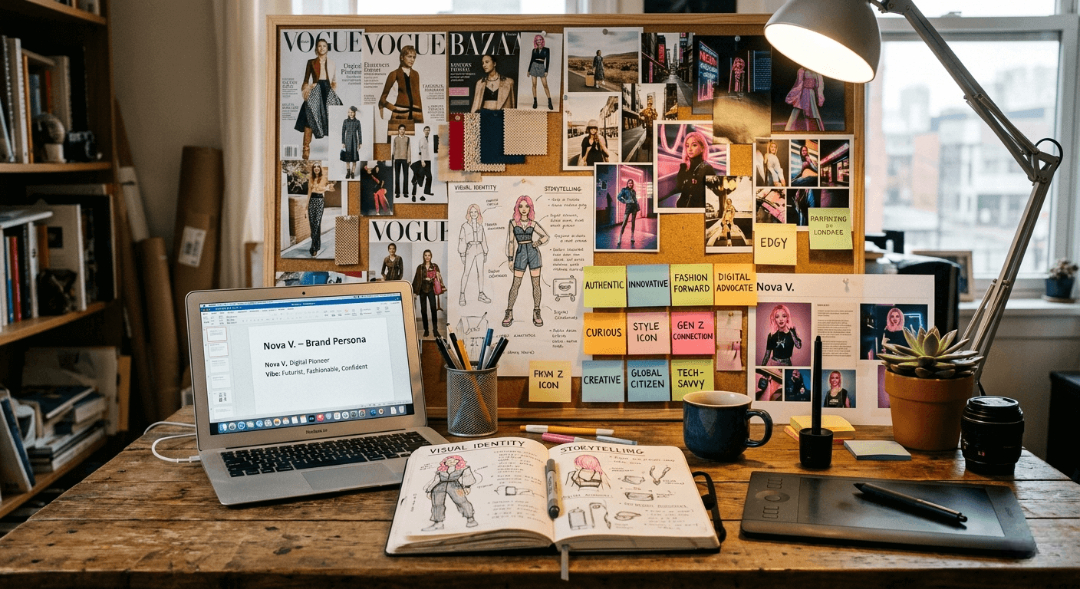
Your AI influencer needs a life, not just a look. Give her (or him, or them) a name, an age, a city, a set of opinions, a morning routine, and even a backstory that can fuel content for months. Audiences form parasocial relationships with influencers they feel they know. The more consistent and specific your persona's personality, the stronger that connection.
Document everything in a "persona bible" — a single reference document covering appearance, voice tone, values, content rules, and backstory. This becomes your creative compass for every piece of content you produce.
Define your visual style
Before you open any AI tool, collect 20 to 30 reference images that represent the aesthetic you want. Lighting style, color palette, clothing aesthetic, location types, and photography angle — all of this should be decided in advance. The clearest visual references produce the most consistent results when you start generating images.
Step 2 — Choose Your AI Tool Stack
The 2026 AI influencer workflow typically involves three layers: image generation, video animation, and voice. You do not need every tool from day one, but understanding the full stack helps you plan your creative process.
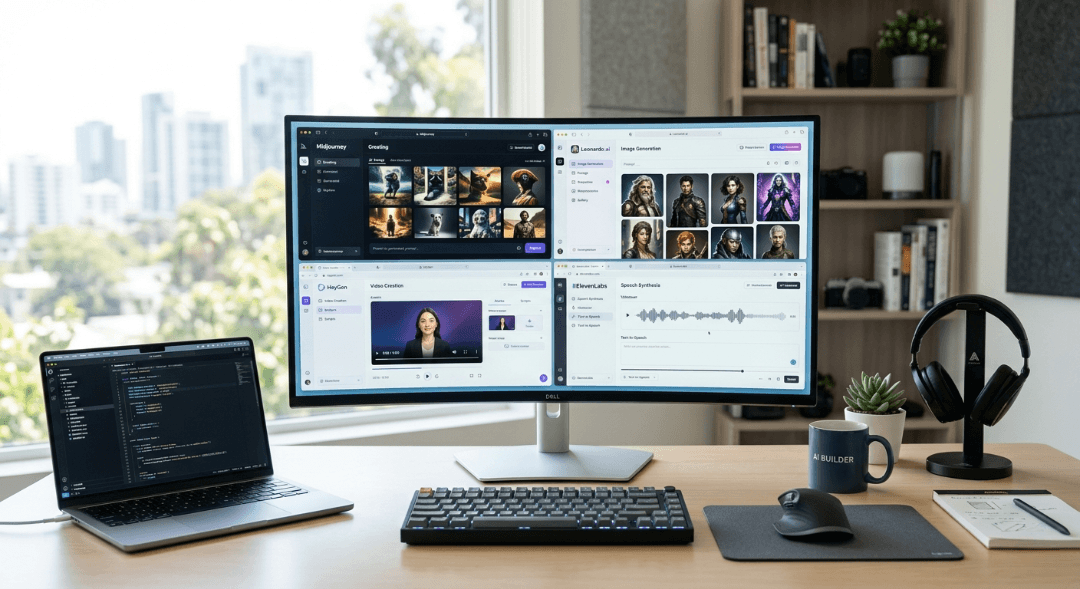
Image generation
Midjourney V7 remains the benchmark for artistic quality. Its Omni Reference system (the evolution of the --cref parameter) lets you lock a character's identity from a reference image and generate that character across virtually any scenario. The recommended reference strength is 300 to 500 for best results. Plans start at $10/month, with the $30/month Standard plan being the practical choice for creators generating content regularly.
Flux (via OpenArt or ComfyUI) is the leading choice for ultra-realistic, Instagram-grade faces. OpenArt's identity-locking system allows you to upload a "seed" character and lock facial features — jawline, skin texture, eye shape — across thousands of generated scenes. This is where serious creators build their character consistency pipeline.
Leonardo AI with its Phoenix model offers a strong combination of consistency quality and pricing, including a meaningful free tier for beginners. It works well for both realistic and illustrated styles, and its Character Reference feature steadily improves with each update.
Video and animation
HeyGen dominates the talking-avatar space. Upload a short video of yourself speaking, or use one of their 230+ pre-built avatars, and generate a digital spokesperson that delivers any script with accurate lip-sync in 120+ languages. For brands using AI influencers to localize content across markets, HeyGen is essentially the only tool you need.
Higgsfield specializes in motion transfer. You upload your character's still image and a reference video showing the movement you want — a dance, a workout, a product demonstration — and Higgsfield transfers that motion onto your character while preserving their face, body proportions, and clothing. The results are strikingly realistic.
Creatify is built specifically for UGC-style social media video. It is excellent for creating authentic-feeling product demos and testimonials for TikTok and Instagram Reels, with a library of 1,500+ avatars and batch generation capabilities.
Voice synthesis
ElevenLabs is the clear leader for voice. In 2026, it supports emotional inflections — whispering, laughing, excitement — making synthetic voices feel genuinely human. Pair it with HeyGen's lip-sync engine for the most realistic talking-head output currently available.
Step 3 — Solving the Hardest Problem: Character Consistency
This is where 99% of people give up, and it is the single most important technical skill to develop.
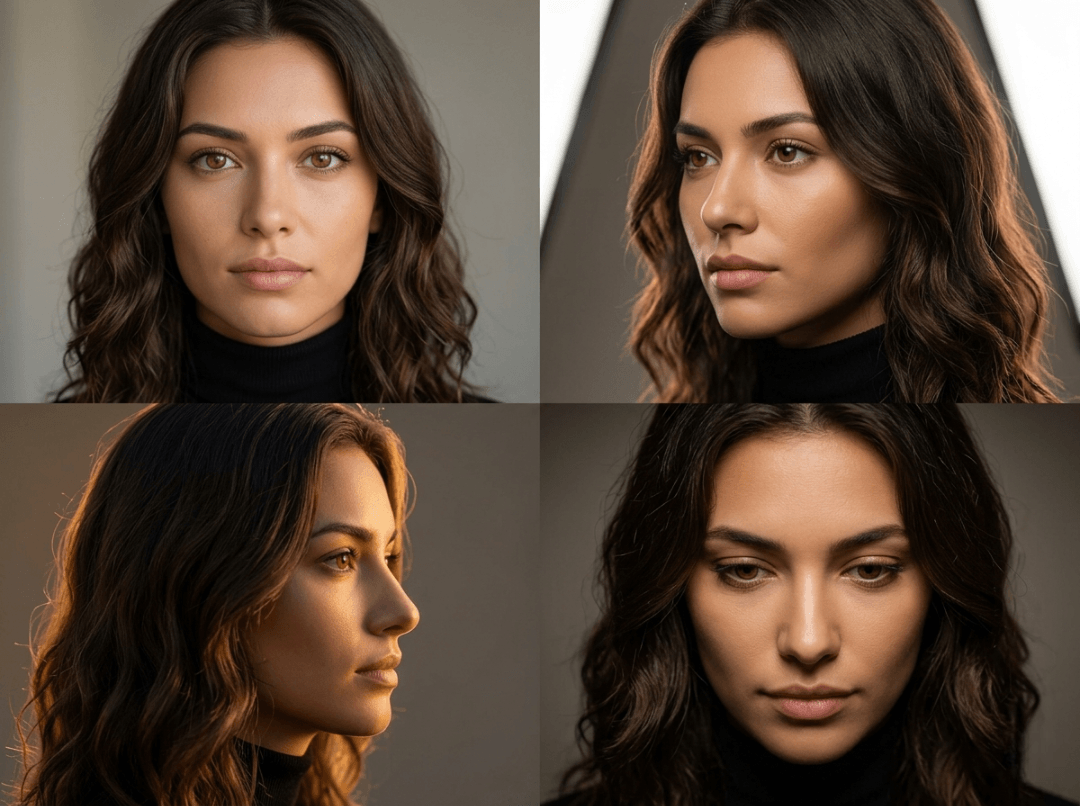
Character consistency means your AI influencer looks like the same person in every image — same facial structure, same skin texture, same eye shape — whether she is at the beach, in a studio, or at a fashion show. Without it, you do not have an influencer. You have a gallery of different-looking people.
Why it is difficult
Diffusion models generate images by starting from random noise and shaping it toward your prompt. Every generation starts from a different noise pattern, which means every output is naturally unique. Great for variety; terrible for identity.
Method 1: Reference-based generation (easiest starting point)
Midjourney's Omni Reference and Leonardo's Character Reference both work by extracting visual features from a reference image — facial structure, hair, skin tone — and applying them to new generations. Upload one clean, front-facing portrait as your "master image," and use that consistently in all future prompts.
The limitation: consistency degrades as you push the character into very different angles or complex body positions. A front-facing reference produces excellent front-facing variations but may lose accuracy with dramatic angle changes.
Method 2: LoRA training (the pro approach)
LoRA (Low-Rank Adaptation) is a lightweight fine-tuning technique that teaches an AI model exactly what your character looks like. You collect 15 to 30 high-quality images of your character from different angles and lighting conditions, then train a small LoRA on your chosen model. The trained LoRA is then applied to every future generation, producing facial consistency above 85%.
When combined with an IPAdapter (which handles facial embedding separately), consistency climbs above 95% even across dramatically different poses and environments. This two-layer approach — LoRA plus IPAdapter in ComfyUI — is the method professional AI content studios use.
Method 3: Platform-native identity locking
OpenArt offers an accessible, no-code version of this workflow. Upload your seed character, and OpenArt's "Character Reference" node locks your influencer's identity across scenarios. The platform handles the technical complexity behind the scenes, making it the recommended starting point for creators who want results without building a custom ComfyUI pipeline.
Your practical workflow
Start with Midjourney's Omni Reference or OpenArt for speed. Generate your character in neutral, front-facing lighting first — this becomes your master image. Save every successful generation. As your creative output grows and consistency matters more, invest time in training a LoRA. The investment pays off exponentially once you are producing content at scale.
Step 4 — Building Your Content Strategy and Growing Your Audience
Creating a stunning AI influencer is the easy part. Building an audience around them is the real work.
Platform strategy
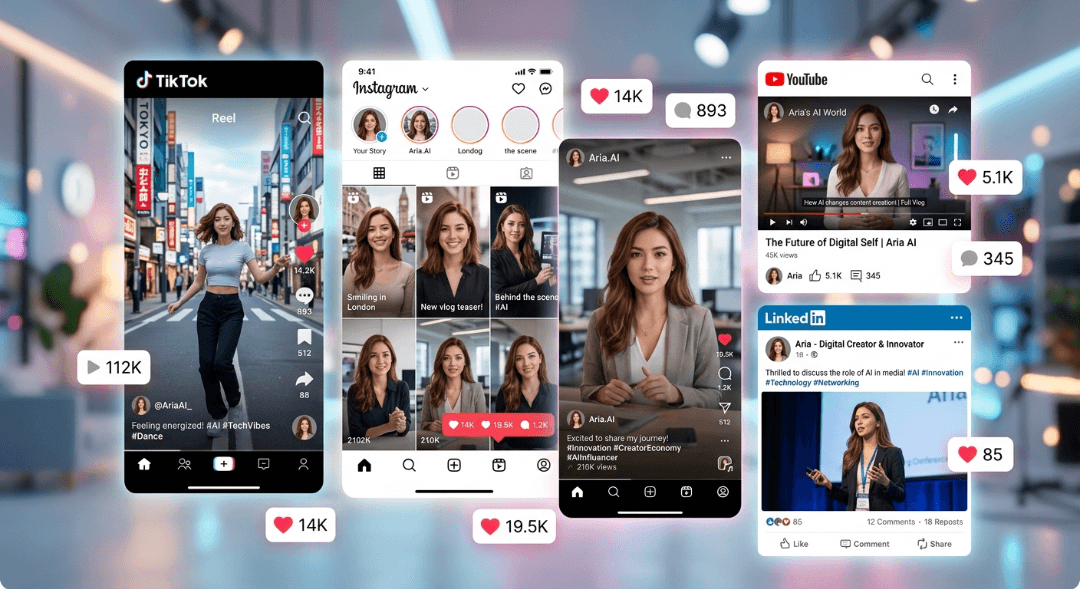
Instagram remains the primary home for lifestyle, fashion, and beauty AI influencers. The grid-based format rewards visual consistency, and a cohesive feed is where an AI influencer's controlled aesthetic becomes its biggest advantage. Post five to seven times per week, mixing static image posts with Reels. Instagram's algorithm currently favors Reels for reach.
TikTok is where AI influencer accounts grow fastest, but it also has the strictest rules. As of January 2026, TikTok requires creators to toggle the "creator labeled as AI-generated" setting on all content featuring realistic synthetic faces, bodies, or voice cloning. Approximately 150 AI influencer accounts exceed 100,000 followers on TikTok — the survival rate is low, favoring the most creative and transparent accounts.
YouTube rewards depth. If your AI influencer persona is built around education, tutorials, or reviews, YouTube's longer-form format supports higher ad revenue and stronger affiliate conversion. Talking-head videos generated with HeyGen perform well for scripted educational content.
LinkedIn is the emerging opportunity almost no one is exploiting. A B2B AI influencer — a fictional "data scientist" or "marketing strategist" — sharing genuinely useful professional insights can build authority and monetize through consulting, digital products, and SaaS affiliate deals at CPCs far above consumer niches.
Content pillars
Decide on three to five recurring content themes that always work for your persona. For a fitness AI influencer, that might be morning routine content, workout breakdowns, supplement reviews, motivational posts, and "a day in my life" style pieces. Having defined pillars means you are never starting from a blank page.
Growth tactics that work in 2026
Trend responsiveness is your biggest lever. AI influencers can jump on trending audio, formats, and visual aesthetics faster than human creators because there are no logistics involved. Set up systems to monitor TikTok and Instagram trends daily, and create reactive content within 24 hours of a trend emerging.
Collaboration (with human influencers) is counterintuitive but effective. Many human creators are happy to react to, duet with, or mention an interesting AI influencer — especially early in the trend cycle when the novelty factor drives shares. Reach out to micro-influencers in adjacent niches for cross-promotion.
Consistency over virality. Accounts that post every day for six months build more durable audiences than accounts that go viral once and then disappear. The algorithmic advantage of consistent posting compounds over time. Aim for daily content on TikTok and Instagram, with at least three Reels per week.
Step 5 — Monetizing Your AI Influencer (Six Revenue Streams)
The revenue model for an AI influencer is broader than most people realize. Here are the six main income streams, from fastest to revenue to most passive.
1. Brand deals and sponsorships
Brand deals are the fastest route to meaningful income. At 10,000 engaged followers, you can start approaching brands. At 50,000, you can command $500 to $2,000 per post depending on niche. At 100,000 followers with strong engagement, rates typically range from $2,000 to $10,000 per campaign.
The approach: build a clean media kit that explicitly states your influencer is AI-generated. Many brands in tech, gaming, wellness, and fashion are actively seeking AI influencer partnerships. Lead with your engagement rate and audience demographics, not just follower count.
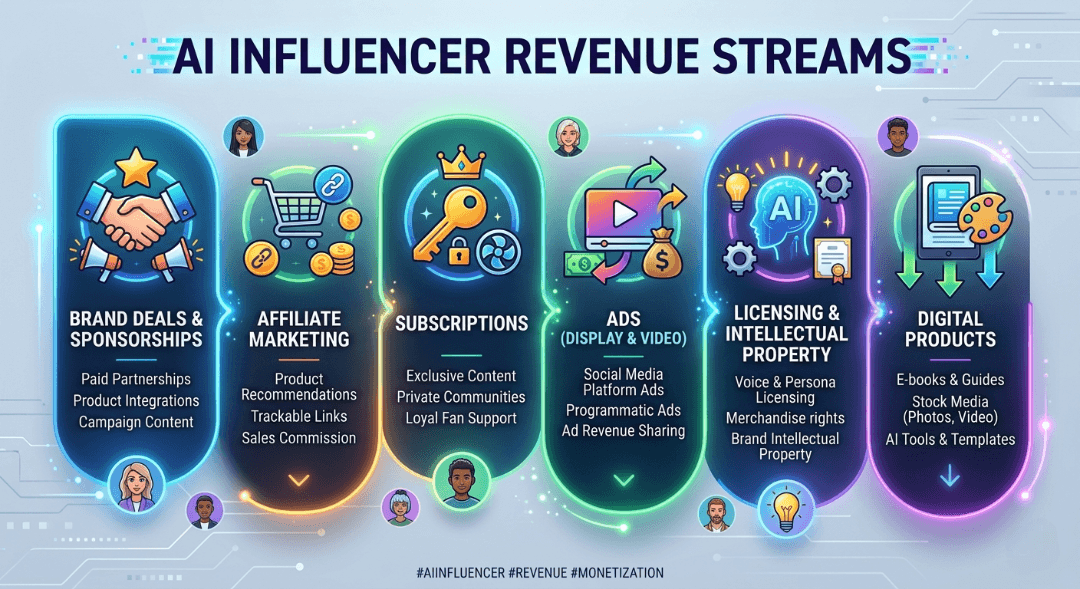
2. Affiliate marketing
Affiliate links are the bread-and-butter income for early-stage AI influencers. Your virtual persona recommends a product, the tracking link goes in the bio or caption, and you earn a commission on every sale — typically 5% to 15% for physical products and 30% to 50% for digital products and SaaS tools.
The smartest approach in 2026 is to focus on high-commission digital products rather than physical goods. Software subscriptions and online courses pay dramatically more per sale than Amazon affiliate commissions.
3. Subscription platforms
Fanvue has positioned itself as the leading "AI-first" monetization platform. Unlike some competitors, Fanvue supports AI creator accounts with a specific badge system and allows creators to charge monthly subscriptions for exclusive content. Creators in the 1,000 to 5,000 subscriber range report earnings of $3,000 to $30,000 per month.
Patreon and Ko-fi work similarly for non-adult content niches — exclusive behind-the-scenes content, early access to posts, and direct messaging tiers all convert well with a loyal audience.
4. Platform ad revenue
YouTube, TikTok's Creator Fund, and Instagram's Reels bonuses all offer direct monetization once you hit certain thresholds. This is passive income that scales automatically with your content volume. For an AI influencer producing daily content, the low marginal cost of each video makes ad revenue disproportionately valuable.
5. Persona licensing
This is the biggest long-term play and the one most creators overlook. Once your AI persona has a built-in audience, you can license their image to brands for use in advertisements, apps, e-commerce product pages, or as virtual brand ambassadors. Rights to use an established AI character with a real following can fetch $10,000 to $100,000 depending on usage terms and audience size.
Lil Miquela's creators license her image for fashion shoots without creating new content specifically for each brand — the licensing income is essentially passive once the character is established.
6. Digital products
Your AI influencer's expertise area can power digital product sales. A fitness AI influencer can sell workout plans. A fashion AI influencer can sell style guides. A tech AI influencer can sell prompt libraries or workflow templates. These products have 100% margin after creation and can be sold repeatedly through your existing audience.
Real-World Workflow — From Still Image to Animated Video
Here is a practical example of how modern AI influencer content is created, using a two-step generative pipeline that combines photorealistic image synthesis with motion transfer technology.
Step 1: Generating the base image
The first step is creating a single high-quality still image of your character in a specific scene. Using a photorealistic image generation model like Flux, Nano Banana Pro, or Midjourney V7, you craft a detailed prompt that specifies every visual element you want preserved.
An effective prompt for scene-specific character placement looks something like this:
"A photorealistic portrait of [character name], a 24-year-old woman with [specific hair description, skin tone, and eye color], positioned in [scene environment]. Maintain exact scene elements: original background composition, same room lighting with warm afternoon window light, same camera angle at eye level, same depth of field with soft background blur, same color grading and tonal balance. Character's skin, hair, and clothing are lit by the same room light source, producing natural shadows and highlights consistent with the environment. Ultra-realistic, 8K detail, editorial photography quality, natural skin texture, no CGI smoothing, no stylization."
The more specific your prompt, the more consistent your results. Save every prompt that produces a successful output — these become templates you refine over time.
The resulting still image is your visual base — a photorealistic character fully integrated into the scene's lighting and environment.
Step 2: Animating with motion transfer
Once you have the still image, the next step is bringing it to life. Tools like Higgsfield or Kling Motion Control handle this without requiring additional prompting.
The process is straightforward: upload your character's still image, upload a reference video showing the movement you want your character to perform, and generate. The AI transfers the motion from the reference video onto your character while preserving their face, body proportions, clothing, and the visual integrity of the original image.
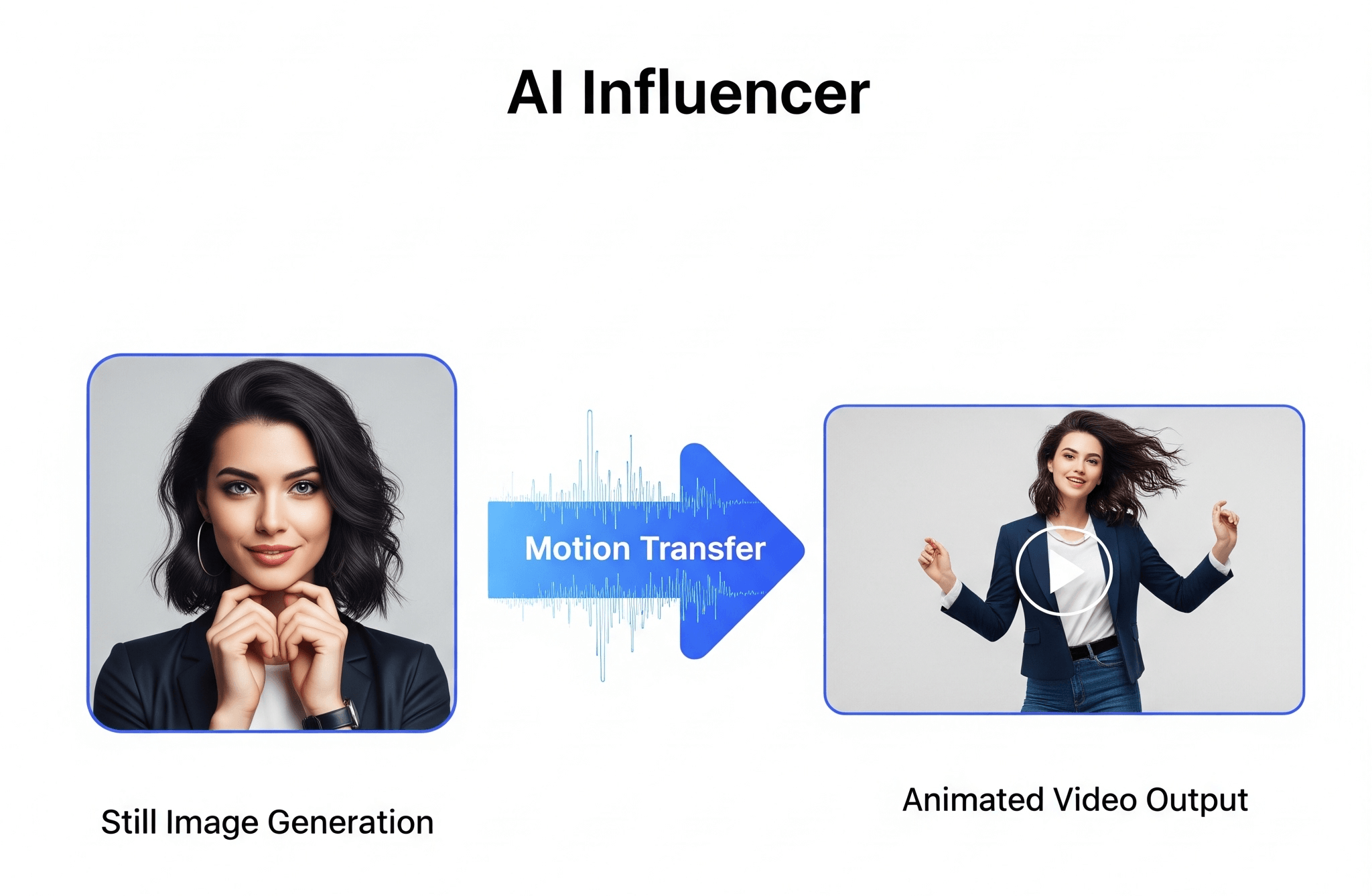
This approach produces content that looks like a real filmed performance rather than a typical AI animation, because the motion data comes from genuine human movement. The character's identity remains fully locked throughout the animation.
The final output is a short video combining the photorealistic still image with authentic transferred motion — ready for TikTok, Instagram Reels, or YouTube Shorts.
Ethics, Disclosure, and Platform Rules in 2026
This section matters more than most guides acknowledge. Getting compliance right is what separates sustainable AI influencer businesses from accounts that get terminated.
Platform-by-platform disclosure requirements
TikTok has the strictest AI disclosure rules. As of January 2026, you are required to use TikTok's built-in "creator labeled as AI-generated" toggle on any content featuring realistic synthetic faces, bodies, voice cloning, or deepfake-style material. Captions, stickers, and watermarks are also acceptable disclosure methods. You cannot impersonate real people without permission, and AI depictions of minors are prohibited entirely.
Instagram and Facebook require AI-generated content to be labeled, particularly for realistic or potentially misleading imagery. Meta's policy is enforced through both creator labeling and algorithmic detection. Accounts that consistently disclose are treated more favorably by the platform in terms of reach.
Fanvue mandates that all AI-generated content be clearly disclosed. During account creation, selecting the "AI Model" option adds a distinguishing badge to your profile. Individual posts must also be labeled through bio statements, captions, watermarks, or hashtags like #AIGenerated. Real identity verification is still required from the account operator.
YouTube permits AI-generated content but requires disclosure in video descriptions and, for some content types, through YouTube's labeling tools.
FTC and legal requirements
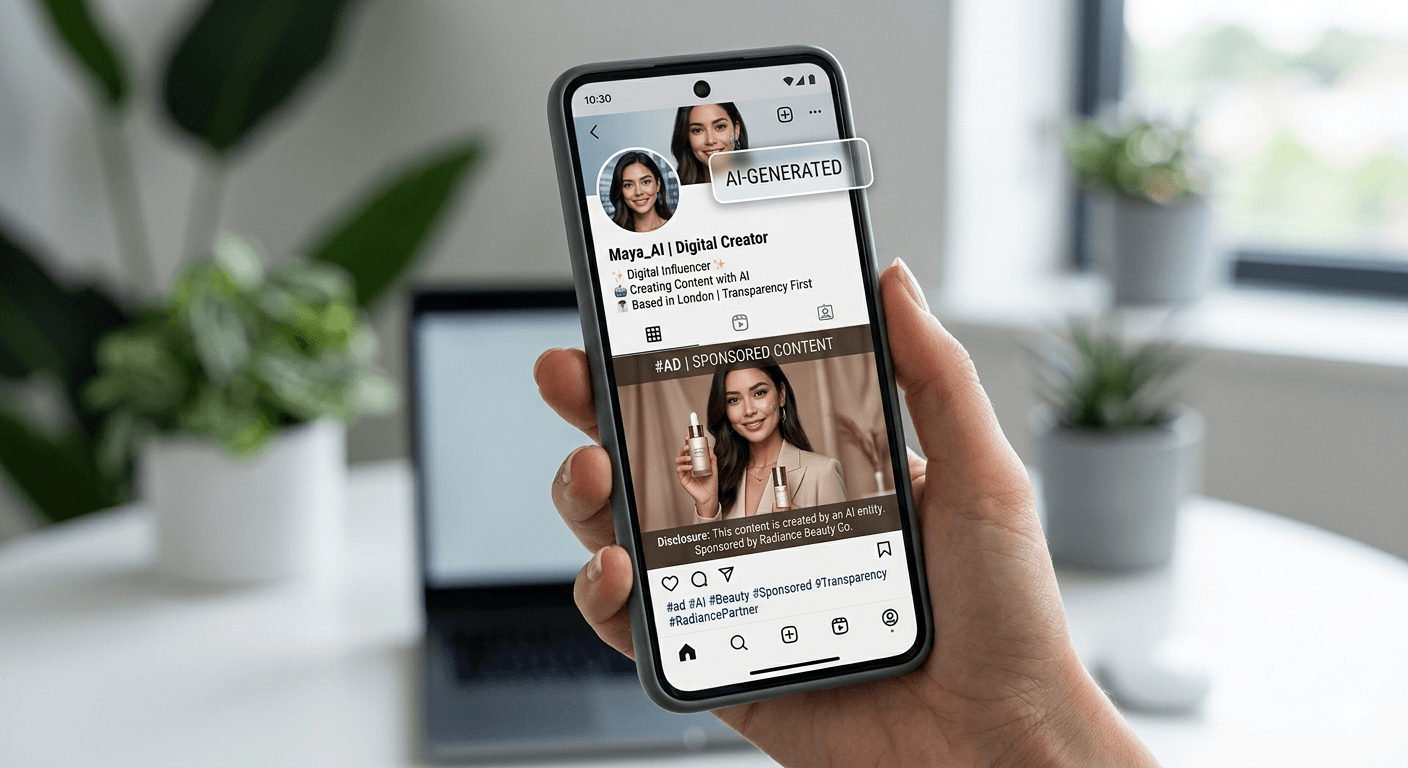
The FTC requires clear disclosure of both the AI nature of the influencer and the commercial nature of any sponsored content. This means labeling both the character as AI-generated and any paid partnership separately. The EU's AI Act and Digital Services Act impose similar requirements for European audiences.
Practically, this means your AI influencer's bio should state clearly that the persona is AI-generated. Sponsored posts should use both #ad and #AIGenerated. Contracts with brands should specify that both disclosures will be made.
The authenticity question
Research shows that explicit disclosure can reduce perceived authenticity, but hiding the AI nature of your influencer creates far larger long-term risks — both legal and reputational. The strongest strategy in 2026 is to make the AI origin part of the story. Audiences are increasingly sophisticated, and transparent AI influencers that lean into their virtual nature tend to build more loyal communities than those that attempt to pass as human.
Intellectual property and ownership
When you create an AI influencer, you are building a proprietary asset. Register the character's visual identity, name, and backstory as intellectual property early. Document the creation timeline with dated files and records — if another creator copies your character's look, having a clear provenance record is your primary defense.
Most AI generation platforms grant full commercial ownership of your outputs, but verify the specific terms before using any tool commercially. Platforms like Higgsfield and The Influencer AI explicitly grant commercial rights; others have more restrictive terms for commercial use.
Conclusion: Is It Worth Building an AI Influencer in 2026?
The honest answer is yes — for the right reasons and with the right expectations.
An AI influencer is not a passive income machine you set up once and forget. It is a creative business that requires consistent content production, strategic thinking, audience building, and active brand outreach. What it removes is the camera, the personal vulnerability, the scheduling constraints, and the geographic limitations of traditional creator work.
The timeline reality: expect 6 to 12 months of consistent daily posting before you see meaningful monetization. The accounts that achieve 100,000 followers do so through genuine value — interesting content, a distinct personality, and a community that actually engages. Pretty images alone do not build audiences.
The opportunity reality: the virtual influencer market is still in its early adopter phase. In 2026, you are early enough to establish real authority in most niches. The creators who start now, build their tool skills, develop their character consistency workflow, and post consistently are the ones who will be the established names when the mainstream wave arrives.

The most important thing no guide can give you is the creative vision behind your character. That is yours to develop. The tools, the workflow, the monetization model — all of that is now accessible to anyone with a laptop and a few hours a week.
Your AI influencer can start generating content tonight. The question is whether she will still be posting six months from now.
That part is entirely up to you.

Leave a Comment
No comments yet. Be the first to comment!